Austin / Central Texas Real Estate News & Updates

Keep up to date with the latest Central Texas real estate trends and news.

Wednesday, January 11, 2012

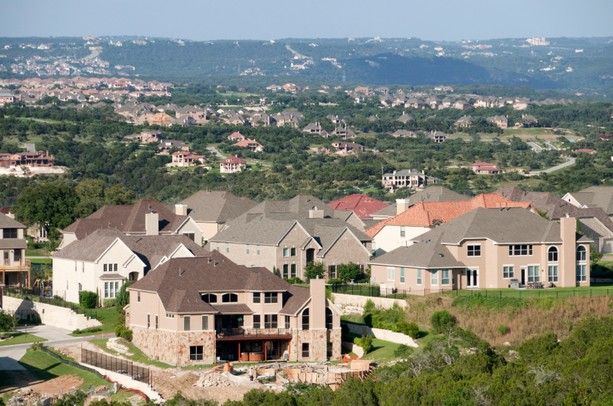
Austin 4th -Cities Where Real Estate Is Ripe For A Rebound

Cities Where Real Estate Is Ripe For A Rebound

The folks at Local Market Monitor, a Cary, N.C.-based real estate research firm, helped us compile this list. They sorted through a plethora of housing and economic data for the 100 most populous cities and their surrounding suburbs, defined as Metropolitan Statistical Areas (MSAs) and Metropolitan Divisions (MSADs) by the U.S. Office of Management and Budget. 

They assessed home prices over the past 12 months, unemployment rates, 12-month job growth projections, population increases from 2006 through 2009 (the most recent data available from the U.S.Census) and new-home construction rates for the third quarter of 2011 as compared to the same quarter in 2010. Home price changes over the past three years were also taken into account, as markets that lost less value in the downturn have the potential to recover and appreciate that much faster.  

Austin Metro Area
Home Prices, past 12 months: 2% decrease
Home Prices, past 3 years: 2% decrease
New Construction: 20%
Population Growth: 11%
Job Growth: 1.5%
Unemployment: 6.6%

All Ranking Cities:
1 - San Jose, CA
2 - Houston, TX
3 - Raleigh, NC
4 - Austin, TX
5 - Boston, MA
6 - Pittsburg, PA
7 - Fort Worth, TX
8 - Oklahoma City, OK
9 - New Orleans, LA
10 -Rochester, NY
 
Full List: The 10 Cities Where Real Estate Is Ripe For A Rebound

Credit: Jeff Gardner/istockphoto Date: January 11, 2012


Labels: , ,

Tuesday, March 22, 2011

Texas Housing Market SPRINGS FORWARD

Existing Home Sales Increase
Existing home sales in Texas trended upward over the last six months, as the housing market begins to show signs of recovery.
The average amount of homes sales over the last six months increased in every Texas major metropolitan area in January for the first time since the expiration of the homebuyer tax credit, according to a report by The Federal Reserve Bank of Dallas. Thursday's report also showed that the six-month average for the whole state improved during the month as well.
Yingda Bi and Jason Saving, the authors of the report, said this alone suggests the residential real estate market "may have finally begun recovery," but other housing indicators also improved in January. According to the Fed's report, all major metros witnessed declines in housing inventory.

To sell all housing inventory in the Lone Star State would take 7.7 months as of January, down from eight months in December, the Fed said.

The serious delinquency rate, anything more than 90 days delinquent, dropped on a seasonally adjusted basis to 2.9% in the fourth quarter of 2010 from 3.4% the previous quarter.

The Foreclosure Listing Service reported that year-to-date postings for foreclosure auctions in the Dallas/Fort Worth metroplex decreased for the first time in 11 years. Postings for the January to April auctions fell 4% compared to the same period of 2010.

"Over the past year, posting activity for this four-month period declined to 21,387 for the first four foreclosure auctions of this year, which includes January through the upcoming auctions in April," said George Roddy, president of FLS. "Last year, foreclosure notices for the first four auctions of the year reached a new record high with 22,305 postings."

The last time there was a decline in year-to-date foreclosure auction postings during this period was 2000, according to Roddy. However, underwater properties made up a larger portion of postings than in past months, up to 27% in April 2011 from 21% in April 2010.

Bi and Saving at the Fed remain cautious on the whole, as home prices will also be a large factor in market recovery.

"New data from the Federal Housing Finance Agency housing price index show slight declines in fourth-quarter housing prices from both the third quarter and year-over-year," their report said.


by Christine Ricciardi.
Follow her on Twitter @HWnewbieCR.

Labels: , ,

Wednesday, January 26, 2011

New Home Sales Surge

New single-family home sales in December rose to their highest level in eight months and prices were the highest since April 2008, raising cautious optimism for a housing market recovery.


Housing Starts & Sales Up
 The Commerce Department said sales jumped 17.5 percent to a seasonally adjusted 329,000 unit annual rate after a downwardly revised 280,000-unit pace in November. Economists polled by Reuters had forecast new home sales rising to a 300,000-unit pace in December from a previously reported 290,000 unit rate. Compared to December a year earlier, sales were down 7.6 percent. Overall 2010 sales dropped 14.4 percent to a 321,000-unit rate.


Economists saw the gains as significant.
"Clearly we are seeing stabilization in new home sales and this data suggests some upward momentum that we have seen in existing home sales. What is important to realize is even in a period of softer new home sales, inventory continues to decline, said Dean Maki, chief U.S.. economist with Barclays Capital in New York.
The level of inventory is at its lowest since the 1960s," Maki said. This suggests the big declines in housing starts are now behind us and housing starts should be on a gradual trend in 2011.”

Brian Bethune, an economist with HIS Global Insight in Lexington, Mass added: "It's meaningful to the extent that there is a pattern of numbers showing increases. It's a sign that there is a turnaround. Things are definitely perking up, but there is a question whether it's sustainable.

Read the latest report from the National Association of REALTORS®: December Existing-Home Sales Jump

Source: "New Home Sales Surge in December," Reuters(Jan. 26, 2011)

Labels: , ,

Friday, January 7, 2011

Austin Ranked 3rd Best Job Market in US - Forbes.com

On the eve of a Katie Couric interview on Austin's job market, the city was ranked as having the third best employment prospects in the U.S.

Forbes.com released a report Thursday ranking Austin 3rd best job market in the U.S
. The business publication cited the city's low unemployment, about 7.1 percent, and low job-seekers per opening ratio, about 2.39 to one.

Forbes said Austin has many assets that have helped it weather the downturn: It's a state capital and major convention center, especially for the music industry, and home to the University of Texas and a wealth of technology companies.

In October, Austin officials announced a new Eco-Merge Green Corporate Center devoted to producing new technologies, Forbes said. Also, several international firms, including Toshiba and China's Taiwan Clean Energy, plan to open shop here.

The listing is not Austin's first appearance on Forbes' best of lists. The publication ranked Austin No. 1 last year for economic recovery, 8th best for business and careers, No. 2 most innovative and 10th best place for best cities for young professionals, among other rankings.

Washington, D.C. topped the most recent list as healthiest labor market among major U.S. metro areas. By one estimate, the nation's capital has roughly one advertised job opening for every unemployed worker in the region. Its unemployment is just 6 percent, the lowest among the country's largest 50 metros.

Las Vegas was ranked as having the worst major job market with 14.3 percent unemployment and eight unemployed workers for every job opportunity.

The see the full listing, click here.

Austin Business Journal
1/7/2011

Labels: , ,

Thursday, January 6, 2011

Austin 26 out of 150 world cities for recovery: Where are the Jobs? Welcome to Jobstown, USA

First impressions mean a lot.

As soon as I got off the plane at Austin-Bergstrom International Airport I could tell this place was different from nearly all the mid-size US cities we have visited since the beginning of the Great Recession.

It was close to midnight and the tarmac was crowded with aircraft parked nearly wing-tip to wing-tip.

The morning rush was going to be huge. Business travelers would be on the move.

Make no mistake - find a city where businesspeople are travelling and I'll show you a city where money is being made. Welcome to Jobstown, USA.

A study by the Brookings Institution and the London School of Economics ranks Austin 26 out of 150 world cities in its ability to recover from the recession well ahead of places like Dallas (39), New York (77), San Francisco (129) and Las Vegas (146). No other US city is experiencing faster job growth than Austin (2.4 percent per year).Over the course of three days, CBS News visited a number of firms to try and figure out what's behind Austin's success as a job generator and if there is anything other American cities can learn from their example.

Here are some things we noticed right away: The place is loaded with young talent. There is venture capital pouring in from all over the world (especially the Persian Gulf). There is a sense that anything is possible. And finally, there is openness to new ideas - no matter how off the wall. In many ways, Austin has the same feel as Palo Alto, California did as it was morphing into what the world knows as "Silicon Valley."

There are negatives in Austin too, for example an infrastructure that's not close to being ready for the crush of people that's flooding the area (avoid the Loop during rush hour at all costs!). The town also remains largely dependent on Texas state government and education for its job base (22 percent of jobs, versus 18% across all U.S. metro areas).

Still, we were left with a sense that Austin represents a model many American cities may need to follow if they are to fully recover from the recession and be competitive in the global economy.


From a tiny toy company struggling to get on its feet to an international tech giant creating thousands of new jobs, CBS News Senior Business Correspondent Anthony Mason gives you an inside look at Jobstown, USA tonight on the CBS Evening News with Katie Couric. We invite you to watch.

CBS News w/ Katie Couric

.

Labels: , ,

Tuesday, November 30, 2010

Austin highest-rated recovery in U.S / 26th in the World

Austin was ranked as having the 26th best economic recovery worldwide, the highest rank of all U.S. cities, a report from the Brookings Institution said Tuesday.

The analysis ranked 150 cities according to three main indicators between 1993 and 2010: employment growth, per-capita gross value added and income per person. The group said Austin employment has grown 3.2 percent between 2009 and this year, while income has escalated about 2.7 percent.

Austin came in No. 40 for growth between 2007 and 2009, clocking in about 0.1 percent employment growth, but a 3.1 percent decline in income. The city was the 25th fastest growing economy between 1993 and 2007, elevating employment about 3.1 percent and income about 3.4 percent.

The local population has growth about 67 percent since 1993 to about 1,763,192 people, according to the report.

Istanbul, Turkey was the highest ranked city worldwide, though Asian cities dominated the listing. Austin edged out Montreal at No. 27, but was just below Sao Paulo, Brazil.

Read more: Austin highest-rated recovery in U.S., Brookings says
Austin Business Journal

Labels: , ,

Thursday, September 16, 2010

:: Austin Ranked 3rd Most Recession-Resistant City ::

In April of 2008, Austin was ranked the third most recession proof city by Forbes because of a lack of a housing bubble, low median home price, low unemployment, and strong job growth segments that would recover more quickly. Plus, Austin was known as “Silicon Hills” for its growing tech sector industries.


Now, over two years later, the Brookings Institute has released their quarterly in-depth analysis which also ranks Austin the third most recession proof city in the U.S.

The top 10 stable cities identified by MetroMonitor are:

1. Albany, N.Y.
2. Augusta, Ga.
3. Austin, Texas
4. Baton Rouge, La.
5. Buffalo, N.Y.
6. Columbia, S.C.
7. Dallas, Texas
8. Des Moines, Iowa
9. El Paso, Texas
10. Honolulu, HI

The Brookings Institute analyzes the health of America’s 100 largest metropolitan economies. It examines trends in metropolitan-level employment, output, and housing conditions to look “beneath the hood” of national economic statistics to portray the diverse metropolitan trajectories of recession and recovery across the country. MetroMonitor looks at the particular industries that drive national economic trends, and takes into account metro areas’ unique starting points for eventual recovery.


For more info you can see the Full Report. You can view many interactive reports for employment, REO properties and other economic measurements.

Labels: , , ,

Tuesday, January 26, 2010

Austin Ranks #2 in Best Performing Cities for Job Growth & Employment


How did Austin rank in job growth compared to the other top 50 U.S. Metros? We were Number Two in the nation!

When you compare to jobs lost in the U.S. in 2009 (4,941,700) or TEXAS (201,700), Austin’s performance is amazingly strong. With so many indications of growth returning to different segments of the economy, Austin is well positioned to benefit early on in the recovery.

The Austin Chamber of Commerce’s customary ranking of the best performing large metros, we retain second place behind Virginia Beach.
#2 Austin’s aggregate job losses of 2,300 (-0.3%) as compared to #1 Virginia Beach job losses of 1,600 (-0.2%).
Fort Worth was 8,000 (-0.9%)
San Antonio was 9,000 (-1.1%)
Dallas was 42,100 (-2.0%)
Houston was 92,500 (-3.5%)

Top 10 Best Performing Cities
1) Virginia Beach
2) Austin
3) Washington DC
4) Newark
5) Fort Worth
6) San Antonio
7) Edison
8) Columbus
9) Baltimore
10) Boston

Source: Austin Chamber of Commerce

Labels: , , , ,

Texas Job Growth Tops Nation for the Decade

While the rest of the nation fell behind, Texas continued to make strides in private sector job growth during the past 10 years.

Figures released by the U.S. Department of Labor Bureau of Labor Statistics showed Texas leading the nation with 724,300 more net private sector jobs in December 2009 compared with one decade ago.

Of the top 10 largest states ranked by civilian labor force, only Texas and Florida had positive job growth over the 10 year period.

Texas Workforce Commission Chairman Tom Pauken credits economic policies for better-than-the-rest job growth.

“While the rest of the nation has only seen net growth in government jobs, Texas’ business, tax, and economic policies have created an environment where businesses can succeed and create the jobs that will allow Texas to lead our nation out of this national recession,” Pauken said.

For December, Texas showed the lowest overall seasonally-adjusted unemployment rate of large states at 8.3 percent, compared to 10 percent nationally. Austin rates were steady at 6.9 percent in December.

“Our nation cannot continue to spend its way out of the recession by incurring ever increasing amounts of government debt,” Pauken said. “For more than a year now I have been warning that Washington policymakers have failed to develop an economic policy designed to encourage capital investment and private sector job creation here in the United States. We need to act quickly in order to avoid a jobless recovery.”

Source: Austin Business Journal

Labels: , ,

Thursday, January 21, 2010

Austin Home Sales up 5%, Down in 2009


Austin home buyers returned in force last month, increasing sales 5 percent from the same time in 2008, according to a Austin Board of Realtors report Wednesday.

The median price of the 1,373 homes sold in December rose to about $194,000, an increase of 6 percent year over year.


“We saw dramatic increases in sales volume in October and November 2009, which were presumably related to the original deadline for the first-time home buyer tax credit,” board Chairman John Horton said.

“However, increases in sales volume beyond November and figures that have improved steadily throughout the year indicate that, while some demand was driven by the tax credit deadline, a sustainable recovery is also underway in the real estate market.”

Despite the encouraging numbers, home sales were still down 6 percent from 2008. Homes sold last year drifted near a $188,480 median, which was down 1 percent year over year. Officials said the overall 6 percent decline in home sales is still a significant improvement when compared to the double-digit decreases experienced in the first quarter 2009.

Source: Austin Business Journal

Labels: , , , , ,

Wednesday, January 13, 2010

Austin New Resale Listings Continue to Fall

Austin New Resale Listings Continue to Fall
Austin residential properties for sale (listings) dropped 17.6 percent in December compared with the same month in 2008, according to a ZipRealty Inc. report today.

The document that compares listings in 27 U.S. metros found on average the homes for sale sloped 26.3 percent year over year and 4.3 percent between November and December. The final month of last year was the largest month-to-month drop in home listings of 2009.

“Seasonality and the heavy activity by first-time home buyers in October and November, who were rushing to take advantage of the tax credit, impacted housing inventory in December,” ZipRealty President and CEO Patrick Lashinsky said.

Austin reported 6.7 percent fewer homes on the market in December than the previous month, which was more than the change in Houston and Dallas. San Antonio numbers were not available.

Dallas listed 9.1 percent fewer homes on the market year over year and 3.8 percent fewer between November and December. Houston posted 5 percent less from November to December and 11.7 percent less in December than 12 months before.

Source: Austin Business Journal : Wednesday, January 13, 2010, 12:15pm CST

Labels: , , , ,

Monday, January 4, 2010

Austin Ranked Best City to Invest in Commercial Real Estate

Austin Ranked Best City to Invest in Commercial Real Estate

Austin has the best prospects for commercial real estate investment this year, a Grubb & Ellis Co. forecast reported today.

The Santa Ana, Calif-based real estate services and investment firm said it expects commercial real estate will continue to falter this year, but at a slower rate, according to the 2010 forecast. Most property types will reach bottom pricing near the end of 2010 with a slow recovery beginning in 2011, officials said.

In a ranking of the top 10 markets for long-term office, industrial, retail and multi-housing investment potential, Austin was listed No. 1. Houston was the only other Texas city to make the list, taking the sixth spot.

“Because commercial real estate lags the labor market, it still has a ways to go before reaching its own low point,” said Bob Bach, Grubb & Ellis senior vice president and chief economist. “The good news is that the freefall we saw in 2009 is over and the future is more certain, giving owners and users of real estate the confidence to begin making decisions again.”

The investment market will see a slight rebound in 2010, according to the forecast, with at least some assets entering the market in 2010. Officials said the shift should prompt increased sales volume of 20 to 30 percent. The report said record-high office vacancy rates will likely continue, reaching as high as 19 percent by the year’s close.

Source: Austin Business Journal : Monday, January 4, 2010

Labels: , , , ,

Wednesday, October 21, 2009

Area Home Sales Jump, Fueled by Tax Credit

Existing home sales in Central Texas rose 6.4 percent in September, the first year-over-year increase in more than two years, and the median sales price also was up, rising 2 percent to $185,250, the Austin Board of Realtors reported Tuesday.

Sales were buoyed by factors including a federal tax credit of up to $8,000 for eligible first-time homebuyers and mortgage interest rates that are hovering around 5 percent.

The 1,780 sales last month were up from 1,748 in August and up from 1,673 in September 2008. The number of sales due to close in October was up 24 percent from a year ago, an indication that the tax credit is continuing to spur sales, real estate agents and experts say.

With pending sales up and prices stabilizing, it seems "to indicate a market that is beginning to recover," said Charles Heimsath, an Austin real estate consultant, although he predicts "a slow ascent into recovery over the next 12 to 18 months."

Heimsath and other experts have cautioned that the housing market, locally and nationally, could lose steam if the tax credit is not renewed, although there are proposals in Congress to extend or broaden it.

"Still, it does appear the worst of the housing downturn is behind us, although it may be some time before we see a marked turn upward," said D'Ann Petersen, an economist with the Federal Reserve Bank of Dallas, adding that she expects "a slow, prolonged recovery."

Nearly half the sales in September were for homes costing between $100,000 and $199,999 — a typical price range for a first-time home.

Nick Teplitz moved to Austin from Los Angeles in late May, drawn by the city's reputation as a "hip, fun city" and lower housing costs than in California.

He said the tax credit was a factor in his purchase of a unit at 2020 Congress, an apartment building that was converted to condominiums on South Congress Avenue.

Teplitz, a writer, closed on his condo June 30, paying under $100,000 for a one-bedroom unit.

Instead of "flushing $2,000 a month down the toilet" on rent in Los Angeles, Teplitz, 32, found he could own his home in Austin for one-third that much.

He said he thinks the tax credit should be extended, because it's "definitely going to keep the market afloat right now ... and keep people buying."

Jay Gohil, chairman of the real estate board, said the tax credit is likely to feed sales into November as buyers scramble to make the deadline.

The credit was passed earlier this year as part of the federal stimulus package. It provides a 10 percent credit, up to $8,000, for first-time buyers and those who have not owned a home in the previous three years. It is available to single buyers who make less than $75,000 a year and couples who make $150,000 or less.

Through September, the 14,286 home sales were down 14 percent from the same nine months of 2008, and the median price was unchanged, at $190,000.

But home sales have been slowly improving this year along with the economy, spurred by the tax credit and low mortgage rates.

Nell Hanson, a real estate agent with JB Goodwin Co., said the company "has had a huge influx of buyers who want to use the tax credit." Although an extension of the credit would be beneficial, "the low interest rates and the potential rise in the median price in Austin for 2010 will keep sales going up," Hanson said.

Greg Cooper, CEO of Goldwasser Real Estate in Austin, said "it would be suicide for the (housing) market" if the tax credit isn't renewed.

"I can't see them (Congress) taking it away right now," Cooper said, at least not until job growth comes back and unemployment eases.

Cooper said sales at his firm were up 51 percent in September over a year earlier, and "if we close what we have pending," October's sales will be triple that of last October's.

"Obviously, the stimulus is clearly helping," Cooper said.

Steve Cochrane, managing director at Moody's Economy.com, an economic forecasting and consulting firm, said he thinks that there is "a better than even chance" the credit will be renewed. He noted that there are positive ripple effects, as owners sell their entry-level homes to first-time buyers and are able to move to another home.

Asked whether the credit is artificially propping up the market, Cochrane said: "One can argue that any kind of government stimulus is artificial. But if it acts as the spark to get the market going, that can be fine. The government doesn't have to stay in the business of providing the spark forever."

By Shonda Novak
AMERICAN-STATESMAN STAFF
snovak@statesman.com; 445-3856
Wednesday, October 21, 2009

Labels: , , , ,

Wednesday, September 30, 2009

Austin cited as one of the next "youth-magnet" cities

According to the Journal, "Austin has become a gathering place for tech- and arts-conscious young adults." The paper also lauded Austin for its cultural attractions like the Austin City Limits Music Festival and South by Southwest. But some of those polled by the Journal expressed concern over how strongly Austin will bounce back from the recession.

What do Washington D.C., Seattle, New York, Portland and Austin all have in common? They are the five cities that top a new Wall Street Journal poll on where young people are likely to flock once economic recovery takes hold.

The Journal polled a panel of experts, from demographers to economists, on where young college graduates are likely to congregate in coming years. Austin ranked fifth on the list with the lowest unemployment rate of the five cities and a relatively high median household income. The Capital of Texas didn't fare quite so well as the others on the education front, with 41.8 percent of 25-35 year olds holding a bachelors degree or higher compared with 61.3 percent in Washington and 64.2 percent in Seattle.

The top 10 post-recession boom towns for the young and ambitious:

1. (tie) Washington D.C.
1. Seattle
3. New York
4. Portland
5. Austin
6. San Jose, Calif.
7. Denver
8. Raleigh-Durham, N.C.
9. Dallas
10. Chicago

Austin Business Journal

Labels: , , , , ,

Tuesday, September 22, 2009

Austin Among Best Performing U.S. Metros (Economic Recovery)

Austin and San Antonio will be the first two U.S. cities to recover from the recession, according to a new national forecast from IHS Global Insight.

The forecast from the Lexington, Mass. economic research firm suggests the two Texas cities will bounce back to their pre-recession job levels sometime next year.
Eight other metropolitan areas are predicted to recover by 2011, a group that includes Texas’ two largest markets, Dallas-Fort Worth and Houston, along with Washington, D.C.

IHS Global Insight said most metros will start adding employment next year, but the increases are likely to be tepid. “Solid gains will not return for the majority of the country until 2011,” the report said.

Austin is also named one of the 20 best performing metropolitan areas in the second quarter of 2009, according to a study by the Brookings Institution. The second quarter MetroMonitor report tracked nine metrics in 100 U.S. metro areas, and found Austin was a leader in many of those, from percent change in gross metropolitan product to percent change in housing prices.

Employment in Austin fell 0.5 percent from its pre-recession peak, that was the second-narrowest gap in the nation. The Texas Capital was also one of only three metro areas that surpassed their pre-recession peak output by the second quarter of 2009. Along with the other two cities, McAllen and Washington D.C., Austin was one of those least affected by the downturn.

The report’s authors said the figures reveal some stark differences in economic performance among metro areas. “Signs at the national level that job and income losses are slowing continue to mask the highly variable performance of individual metropolitan economies,” said Alan Berube, co-author of the report. “While several metro areas may have reached a turning point, there are many others that still have not touched bottom, as well as a few that have almost fully recovered.”
Texas had the strongest showing, with six cities among the 20 strongest metro areas: Austin, Dallas, El Paso, Houston, McAllen and San Antonio. Florida dominated the list of the 20 weakest metro areas with eight, including Bradenton, Cape Coral, Lakeland, Miami, Orlando, Palm Bay and Tampa.
For the full report, click here.

Source: Austin Business Journal

Labels: , , ,

Thursday, July 23, 2009

Austin Poised for Fastest Recovery

From now until the end of 2010, the Austin economy is projected to grow by $5 billion. That, coupled with relatively subdued unemployment, has the Texas Capital poised for the quickest economic rebound in the nation, according to Forbes.com.


Overall, many economists expect the national economy to return to growth later in 2009, perhaps as soon as this summer. But, as the Forbes writers point out, that won't be the case everywhere. While some cities are positioned for a quick rebound, others face a slow crawl to recovery that could take years.


Texas cities such as Austin, San Antonio, Dallas and McAllen are in a good position, Forbes' analysis found. That's due in part to the fact that Texas did not see the massive real estate bubble that formed in states like California, Nevada and Florida.


To determine the 10 cities that look best poised for recovery, Forbes examined estimates from data provider Moody's Economy.com of the projected gross domestic product of metropolitan areas across the U.S., as well as unemployment figures from the Bureau of Labor Statistics and home prices, incomes and affordability data from the National Association of Home Builders.
The analysis shows the importance of a city's economic make-up. In essence, the more diverse the industry base is in a particular city, the better off that city is when it comes to quick recovery.
The top five cities for recovery, in order, are Austin; Fayetteville, Ark.; Boulder, Colo.; Huntsville, Ala.; and San Antonio.

Source: Austin Biz Journal

Labels: , ,